The Poz: A window on student life
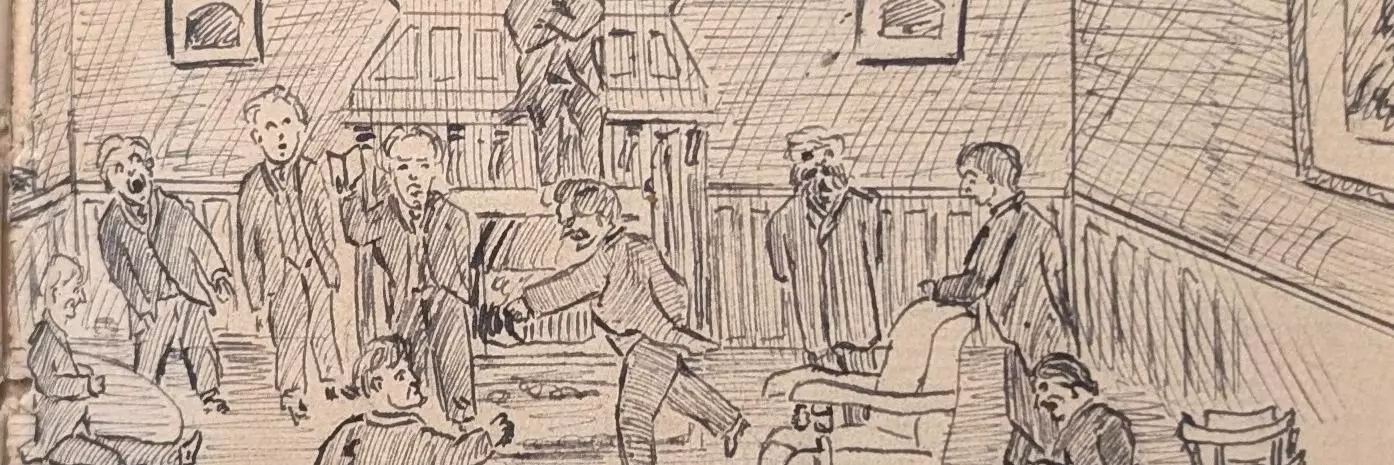
"Some of the present students of the college, mindful of its past traditions and stimulated by its present outlook, conceived that it lay on them [...] a duty to revive a journal which was for more than half a century a familiar detail in the academic life of our alumni."
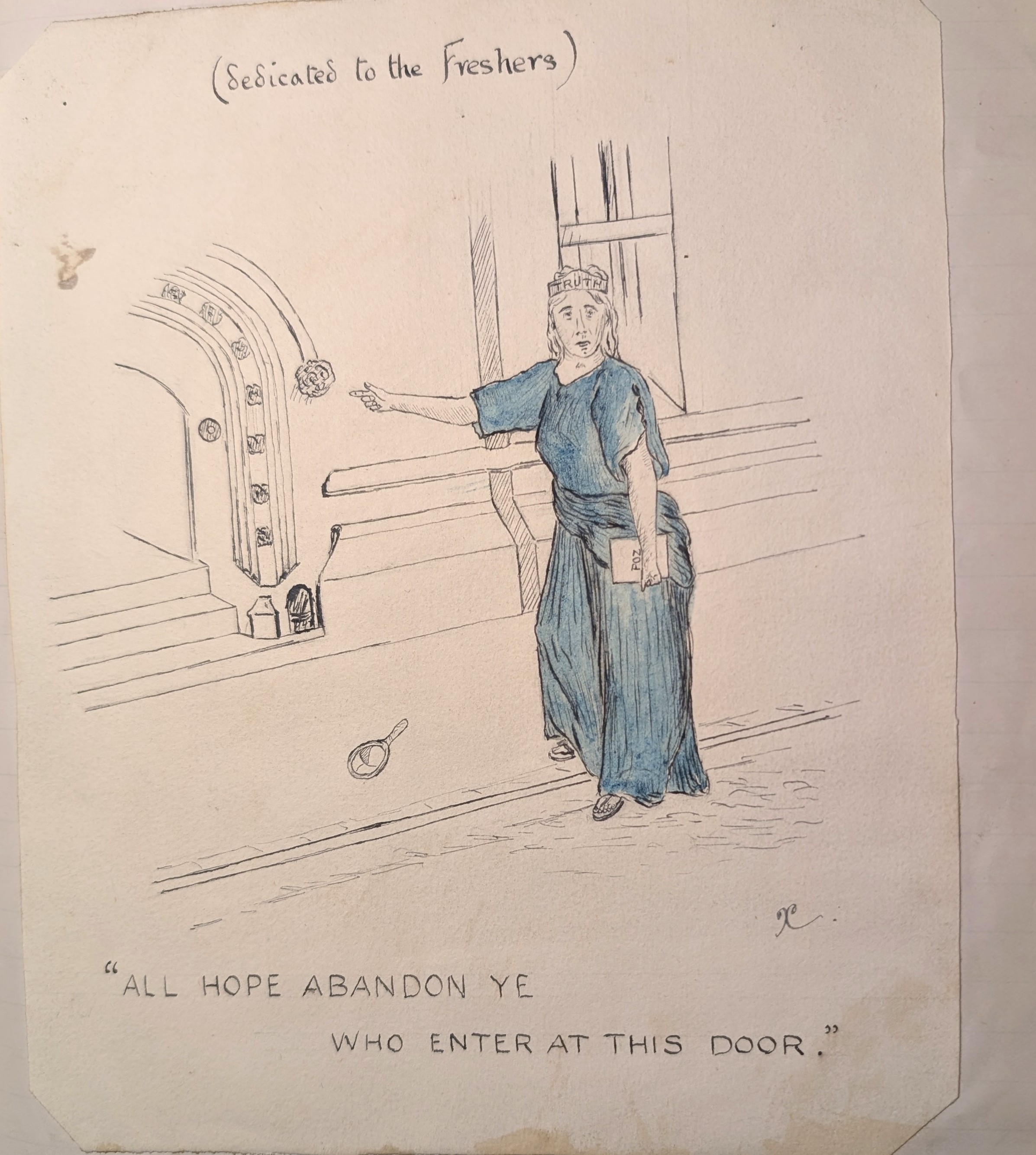
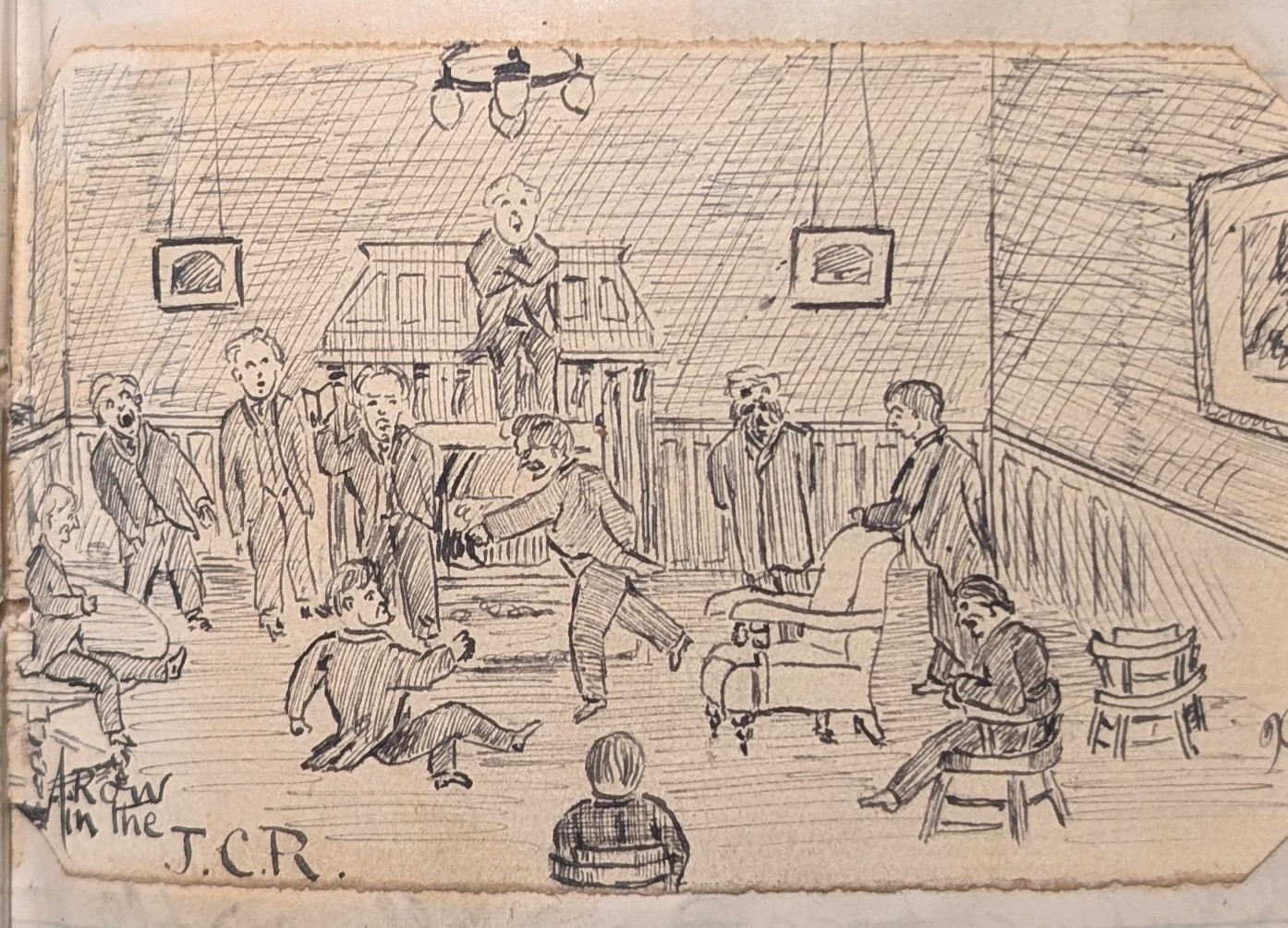
These words are taken from the opening ‘Prefatory Note’ of the first issue of a new series of The Manchester College Repository, a student magazine relaunched in 1893. The Repository, shortened to The Poz, was a handwritten journal where a single copy of each issue was shared amongst Manchester College students. The oldest surviving copies date from 1815, and a new series was often launched shortly after each of the college’s several relocations throughout the nineteenth century. The focus of the above extract shows that the author was acutely aware of this longer history. After describing their sense of ‘duty to revive’ the journal, they humbly admitted ‘how far inferior’ their own efforts would be compared to the ‘men who made of the old Poz a thing of good writing and strong wit.’ The article, therefore, presented the Poz as an established, and successful, cultural product within the longer history of Manchester College. In this way, Poz was framed as a means of connecting current students with the history of their college and the men who had come before. This was particularly important following the move to Oxford and gives us some insight into how students navigated this transition in their college’s history. More than simply an entertaining magazine (although it certainly is that!), Poz is a unique source that offers a glimpse into student culture during a particularly transformational period within the history of Manchester College.
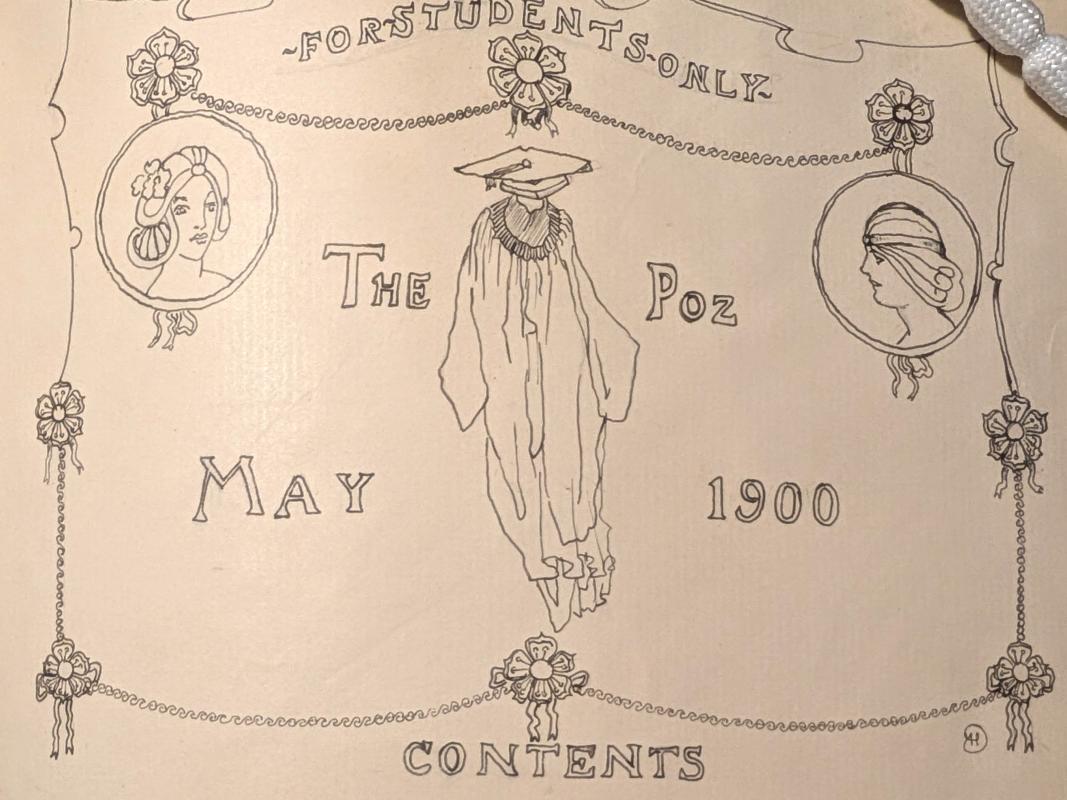
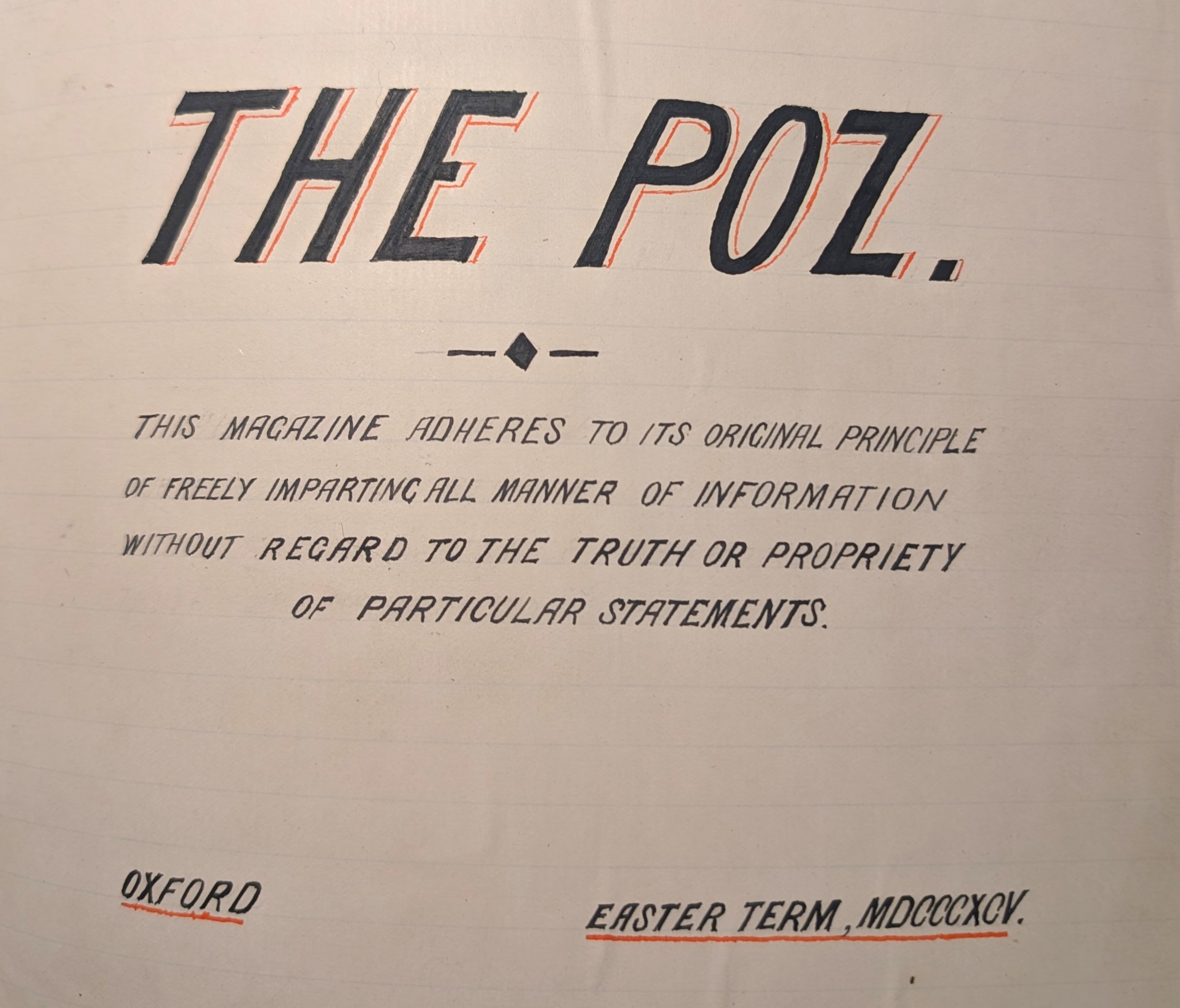
A close identification with the college can be seen in the content of Poz, and in particular the frequent use of insider humour. The magazine allowed Manchester students to create and share jokes about various aspects of college life. One example is a mock ‘Annual Report of the Students’ which satirised the official college report circulated with alumni and other supporters of the college. Whereas the official report shared news of scholarly achievements and recent donations, the students’ mock piece ridiculed tutors and complained about the poor quality of lectures. The author, who was wise enough to remain anonymous, claimed that ‘better treatment in a more interesting manner’ could easily be found in books. To add insult to injury, college lectures were also described as ‘inferior’ to those held elsewhere in the university and that students only attended out of necessity. A harsh review! On one level such mockery aligned with contemporary student humour throughout the university. Periodicals from other colleges are filled with similar critiques of tutors and other authority figures. However, the Poz gave this humour a distinctively Manchester character by directly imitating the official college report. Part of the impact of the piece rested on the presumption that readers shared a degree of institutional knowledge and would recognise the parody. A more explicit example of this is seen on the cover page of subsequent issues, which again drew from the official college report for inspiration. Compare the following two subtitles:
This College adheres to its original principle of freely imparting theological knowledge without insisting on the adoption of particular theological doctrines [from The official college report ]
This magazine adheres to its original principle of freely imparting all manner of information without regard to the truth or propriety of particular statements [the subtitle of The Poz ]
The practical form that Poz took was key to enabling such content, and particularly avoiding the censorship of college authorities. The vast majority of pieces were written anonymously, which ensured it was much harder to connect any especially rude humour to individuals. The intended readership of Poz was also narrowly defined. The cover of each issue warned that the content is intended ‘For Students Only’. As a handwritten product this narrower readership made sense as each issue had to be shared amongst the common room. This distinguished Poz from contemporary student magazines, many of which aimed to appeal widely to alumni and other friends of the college. These journals were all printed and many were posted to subscribers, features which again defined Poz as an outlier. The very features that rendered Poz so unique are also key to explaining its impressive endurance. The series that began in 1893 continued until 1916, a much longer period than was normal for student-led college magazines. Such ventures frequently collapsed after one or two years, often coinciding with the graduation of a set of keen student editors. Where college magazines did survive, they typically enjoyed formal support from senior members or alumni committees rather than being wholly student-led. Such official support was often crucial in meeting the costs of production and distribution as well as working to print deadlines. By contrast Poz, in being handwritten and restricted to the common room, was shielded from such pressures. Manchester students could simply add to the magazine as and when they had the time to do so and avoid the expenses of printing a formal journal. This flexibility distinguished Poz and is key to understanding how the 1893 series survived for twenty-three years.
The long dormancy of The Poz was recently ended, with the magazine being relaunched after 110 years without a new issue. The new series promises to stay true to many of the defining features of the original magazine, including the choice for contributors to remain anonymous. In other ways, the relaunched magazine will be a product of the twenty-first century, notably through plans for an online edition. Throughout its long history, Poz has always combined an appreciation of its own history with commentary (and humour!) of the present moment. The decision to relaunch the magazine today marks a continuation of this approach. Perhaps in a hundred year’s time, historians will look to these new issues of Poz to gain a glimpse into student culture of 2026?
About the author - Isaac Lethbridge
We are delighted to publish this guest blog by Isaac Lethbridge, who studied History at Lady Margaret Hall before undertaking postgraduate research at The Queen's College. He recently completed a master's degree in Modern British History, with a dissertation examining magazine culture in late Victorian Oxford.
Drawing on this research, Isaac explores The Poz and what it reveals about student life, culture and change at Manchester College.